Real Estate Magazine

Realty Blogs

Things to do on taking possession of your New Home

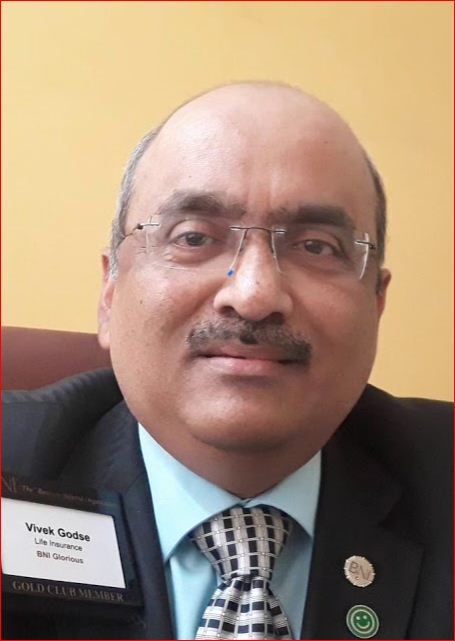
Congratulations on your new home!  A significant milestone, it symbolizes stability & security. Verify Legal Documentation to ensure they are complete & accurate. They include: Sale Agreement & Title Deed: Confirms authenticity & registration. Occupancy Certificate (OC): Ensures builder has adhered to approved plans. Encumbrance Certificate: Confirms property is free of legal liabilities. Builder’s NOC: Necessary for smooth registration & utility connections. Detailed drawing / plan of concealed wiring & plumbing (from builder)    Inspect the Property and to make sure everything is as mentioned in the agreement: Structural Quality: Look for cracks, dampness, or uneven flooring. Plumbing & Electrical Work: Test faucets, drainage, switches, & sockets. Paint & Finishing: Check walls, ceilings, & fittings for a flawless finish. Doors & Windows: Ensure smooth operation & proper locks, get entry card & electronic lock demo Video door phone & settings   Check Amenities & Common Areas Additionally, in gated communities, inspect shared amenities like parking, lifts, clubhouses, & security systems.    Utility Connections: Ensure they are in your name & functional Electricity & Water Supply Gas Pipeline Connection (if any) or its provision  Internet & Cable Services (Tip: Wired internet is way more stable than wireless) Maintenance Services Mechanism to receive timely updates of service interruptions.   Interiors:  Take precise measurements forFurniture placement Modular kitchen designs Tip: Consider hiring a professional interior designer   Review Financial Protection Owning an apartment is a significant financial investment. Safeguard it by: Getting your Life Insurance Policies up-to-date including a cover that’s adequate to cover unforeseen calamities. Purchasing Home Insurance for damages caused by natural calamities, theft, or accidents. Reviewing Financial Goals to adjust and accommodate new expenses.   Change Your Address and communicate it: On aadhaar card of all family members  To Banks, Insurance & Credit card Companies Employers & educational institutions Post office & courier services. Also, inform your old post office to re-direct mail to your new address. (They are obliged to do it for about 3 months)   Register your new address on Google Maps for people to locate faster.   Know your neighbours  Build a good rapport with your new neighbours besides familiarising yourself with local amenities like grocery shop, hospitals, cooking gas providers, gas stationpetrol pump, 24 hr medicine shop & public transport.    Plan a Housewarming Celebrate your new home with family & friends. Housewarming not only marks your achievement but also helps create lasting memories.   Conclusion Taking possession of a new flat involves more than just signing papers & moving in. By following this checklist, you can ensure a smooth transition & secure your investment for years to come.  Vivek Godse Life Insurance Agent BNI Sr Support Director | Trainer 9422529005 support@vivekgodse.com

Things to do on taking possession of your New Home Read More »

Unlocking Pune’s Residential Market-Trends and Insights from the Last 3 Years

Pune’s residential market has shown resilience and growth over the past few years. This report by CRE Matrix provides an in-depth analysis of the city’s housing trends over the last 6 quarters and up to 3 years. The report presents key insights through graphs illustrating quarterly sales and launches, as well as the total value of units sold over the past three years. A comprehensive table of top launches in Pune city in CY 2024 is also featured. This report offers valuable data and trends for developers, investors, and homebuyers. With its focus on recent market activity, this report serves as a timely resource for understanding Pune’s residential market. By examining the latest trends and developments, readers can gain a deeper understanding of the city’s housing landscape   Pune’s commercial office market has undergone significant transformations over the past 12 years. To provide a comprehensive understanding of this evolution, CRE Matrix has compiled a detailed report on the rental index of A-grade offices in Pune. This report delves into the percentage change in rents from 2012 to 2024, offering valuable insights into the market’s growth trajectory. Additionally, the report compares the rental trends between Pune’s Central Business District (CBD) and Hinjewadi, highlighting the divergent paths taken by these two prominent commercial hubs. The findings presented in this report will serve as a vital resource for investors, developers, and occupiers seeking to navigate Pune’s dynamic commercial office market. With its in-depth analysis and data-driven graphs, this report provides a definitive guide to understanding the complexities of Pune’s A-grade office market.

Unlocking Pune’s Residential Market-Trends and Insights from the Last 3 Years Read More »

Legal Evolutions in Real Estate in the state of Maharashtra

The Indian real estate sector is undergoing a significant transformation, propelled by an ever evolving legal framework and reforms aimed at transparency, accountability, and efficiency. Of all the states constituting India, Maharashtra has emerged a front-runner in implementing these changes, ensuring a robust legal foundation for developers, investors, and homebuyers alike. This article explores key legal developments shaping the sector, and Maharashtra’s pivotal role therein. Regulatory Evolution in Indian Real Estate Implementation of RERA The Real Estate (Regulation and Development) Act, 2016 (RERA), marked a paradigm shift for the real estate industry, aiming to protect homebuyers and ensure project transparency. Its key features include: Escrow Accounts: Preventing fund diversion. Mandatory Registration: Projects and agents must register with state RERA authorities. Standardised Agreements: Ensuring compliance and imposing penalties for violations. Dispute Resolution: Speedy resolution of grievances. Maharashtra’s Impact: MahaRERA, the state’s regulatory authority, has set benchmarks for effective implementation. Its proactive measures have instilled confidence among developers and buyers alike, ensuring absence of disputes or their faster resolution besides streamlined operations. Amendments to Land Acquisition Laws The ‘Right to Fair Compensation and Transparency in Land Acquisition, Rehabilitation and Resettlement Act, 2013’ replaced outdated laws, providing fair compensation and rehabilitation to landowners. Maharashtra’s Perspective: Robust policies have facilitated landmark infrastructure projects like the Mumbai Metro, Pune Metro, and Samruddhi Highway, minimising disputes and expediting approvals. GST in Real Estate The introduction of the Goods and Services Tax (GST) created a uniform tax structure, replacing multiple indirect taxes. For under-construction properties, GST is levied at a flat rate, simplifying compliance. Maharashtra’s Contribution: Clarity in tax structures has fostered an organised market, benefiting developers and buyers alike. Legal Reforms Specific to Maharashtra MahaRERA Initiatives MahaRERA has been instrumental in driving regulatory reforms, including: Ease of Access: Online registration and grievance redressal mechanisms. Dispute Resolution: Conciliation forums have resolved numerous disputes, reducing litigation. Transparency: Mandatory disclosure of project details, including financials, on the MahaRERA portal. Unified Development Control and Promotion Regulations (DCPR) Maharashtra’s Unified DCPR aims to optimise land use and boost affordable housing through: Increased floor space index (FSI) to encourage vertical growth. Incentives for slum rehabilitation and redevelopment. Provisions for transit-oriented development. Stamp Duty Reductions To revitalise the real estate market during the pandemic, Maharashtra temporarily reduced stamp duty, leading to a surge in property registrations. This policy underscored the importance of flexible fiscal measures. Redevelopment Policies Maharashtra’s Cluster Redevelopment Policy facilitates the redevelopment of old buildings and slums, ensuring better living conditions and modern infrastructure. Challenges in the Legal Landscape Despite these advancements, the sector faces persistent challenges: Dispute Resolution Delays: While MahaRERA’s forums are efficient, traditional courts remain burdened. Complex Approval Processes: Developers encounter delays navigating multiple approvals. Land Ownership Disputes: Unclear titles and overlapping claims hinder large-scale projects. Compliance Costs: Smaller developers struggle with increased regulatory costs. Proposed Solutions and Future Outlook Digital Transformation Land Records Digitisation: Initiatives like Maharashtra’s e-Mojani aim to ensure clarity and reduce disputes. Online Approvals: Streamlining project approvals through digitisation. Enhanced Coordination Collaboration between state authorities and developers can minimise delays and create a more investor-friendly environment. Policy Revisions Simplifying regulations and incentivising sustainable practices will attract long-term investments. In conclusion, Maharashtra’s proactive legal reforms have not only set a benchmark for other states but also positioned the real estate sector as a pillar of economic growth. By addressing persistent challenges and leveraging technology, the state can continue to lead India’s real estate transformation, benefiting all stakeholders. Adv. Mukessh Bajirao Zende, B. Sc. LL.B. MBA, (Corporate Law) Patent Attorney On Record +919822268068 adv.mukessh@tosslegal.com

Legal Evolutions in Real Estate in the state of Maharashtra Read More »

Real Estate is Indian Entrepreneurs’ No.1 Choice of Investment! Why?

As we stare down the barrel of a new year, we have the annual opportunity to look back at the world and try to make sense of the year that has just passed. Today, I want to speak about the world of Indian and global entrepreneurs and their investment habits. As data shows, these habits have everything to do with real estate! HSBC recently released their HSBC Global Entrepreneurial Wealth Report 2024. They focused on multiple aspects of business in this, but most importantly they performed in-depth analyses of how entrepreneurs from all corners of the earth invest their money. This report, which surveyed business owners or entrepreneurs – from across the world, mind you -allocate their wealth to investment, and real estate forms a significant part ofit! That is to say, they use real estate to generate a stream of income – mostly through renting or leasing out their properties. This data shows that throughout our world, entrepreneurs invest in real estate! That same HSBC report goes on to state that Indian entrepreneurs have some of the highest rates of investment in real estate. 61% of Indian businessowners and entrepreneurs, for instance, own real estate for investment purposes. To those of us that are watching the Indian real estate sector, this should not come as a surprise. 2024 has been a year of meteoric growth for Indian real estate; private investment alone grew by 20% this year. Between 2023 and 2024, Indian real estate developers are estimated to have built nearly 5 million homes. In 9 Indian metropolises, over 90 million square feet of office space was leased. In the coming year, that space could increase by at least 15 million square feet. Just like India’s GDP, our businessowners aim to grow and make money. Therefore, I contend that the study of entrepreneurs is vital to understanding our modern economy. So, if we were to listen to Indian entrepreneurs, what are they saying? They are saying that there is a reason that they are optimistic about investing in real estate. India is going to grow – its cities will sprawl out horizontally as they climb ever higher. The question is, will you be a wise investor or will you be left behind? Investing wisely and carefully in real estate is a great way to get Real Rich and, in today’s ‘age of the entrepreneur’, real estate has been proven to be the world’s preferred avenue of investment! Final Thoughts for the Wise Investor The Indian real estate market in 2025 is, barring any unforeseen pitfalls, inevitably going to be a growth market. Investing in this market, whether it is a long-term investment or a quick-flip, is bound to be a wise choice. If you are a wise investor and you are investing safely, 2025 is sure to yield immense returns! Dr. Atul Goel MD, Goel Ganga Group

Real Estate is Indian Entrepreneurs’ No.1 Choice of Investment! Why? Read More »

Minimum is Maximum

Living in the city often means learning to make the most of limited space. At times, this scarcity can be overwhelming, as if the walls are closing in. But with thoughtful thinking & creativity, even the smallest spaces can become havens of comfort & joy. In the busting cities like Pune, where lifestyles are fast-paced & homes compact, space planning has become more than a design trend-it is a necessity. For dual-income households juggling busy schedules, a well planned space is more than functional, it is a sanctuary. Designers today face the challenge of transforming confined areas into reflections of personal style while maximizing every square inch. Working with a designer is like uncovering hidden potential within your space. Every corner, every ray of light is optimized to create an environment that not only works for you but feels like home. Small spaces can transform into cozy nooks, vibrant offices or warm, welcoming homes. The key lies in decluttering & simplifying- letting go of the unnecessary to make room for what truly matters. There is something freeing everything has it’s place, and every detail exudes calm & balance. We, at Vineeta Kuray Design Studio, focus on the philosophy of seamless flow where spaces blend effortlessly, creating an illusion of openness & luxury. Soft soothing hues, uniform tones & carefully chosen furnishings breathe life into rooms, making them feel light and airy. Materials like veneers and laminates reduce visual clutter, mirrors & glass introduce depth, amplifying natural light & creating a Sense of expansiveness. Strategic pop of colour, clean lines and open plan layouts not only enhance aesthetics but also foster a sense of connection. These design choices turn small city homes into tranquil retreats, where daily stresses melt away. With thoughtful planning, less truly become more- a celebration of simplicity, functionality and beauty. A well designed space does not just meet your needs, it nurtures your soul, proving that even smallest home can hold the biggest dreams!! VK DESIGN STUDIO Ar. Vineeta Kuray Founder & Director kurayv@yahoo.in +91 98225 35416    

Minimum is Maximum Read More »

Rapid infrastructure development driven by nodal authorities is fuelling the growth of satellite townships across India

Mumbai, 9th December 2024 India’s urbanization is at a turning point, marked by a surge in rural-to-urban migration. This drives the expansion of existing urban nodes, towards areas along their peripheries. 40% of India’s population, equivalent to 60 crore people, is expected to reside in urban areas by 2030. Anticipating the growing need for quality urban infrastructure, India is expected to invest over INR 143 lakh crores in infrastructure by 2030. Most of this expenditure is to be directed towards urban clusters, driving significant activity in infrastructure-led urban development. Projects under consideration include second airports, inter-city metro connectivity, aero-cities, highways (including quick transit freeways), high-speed rail corridors, IT + ITES zones, large datacenter concentration zones, among others. Key Existing & Upcoming Infrastructure projects Impacting Urbanization in India: Mumbai Trans-Harbour Link: (Operational since 2024) It is a groundbreaking infrastructure project, being the longest sea bridge in India. Aimed at enhancing connectivity between Mumbai and Navi Mumbai, it has reduced travel time from 2 hours to 30 mins. Further, it provides quick access to the Mumbai-Pune highway, the Mumbai-Nagpur Highway and the Mumbai Goa Highway. The MTHL has positively impacted areas like Uran, Talegaon, Panvel, and Kharghar, with land prices appreciating nearly 2.3X from INR 1200 to INR 2250 per sq.ft. (2020 to 2024) Bangalore Kempegowda International Airport: (Terminal 1 Operational since 2008, Terminal 2 – 2024) It is among the 3rd busiest airports in India, currently serving 3.7 crore passengers annually, operating over 300 flights daily and connecting over 100+ destinations worldwide. Operationalization of this airport has added a new dimension to the expansion of North Bangalore. Projects such as BIAL, STRR, Tech Parks, Aerotropolis etc. are designed to be integrated townships, with significant contribution towards the city’s future economy. These announcements have contributed to a nearly 2.5X land price appreciation, from INR 1800 to INR 4500 per sq.ft. in the period 2020 to 2024, most pronounced around the north Bangalore micro-markets like Devanahalli, Chikkaballapur, Hebbal and Yelahanka.  Navi Mumbai Airport & NAINA (Mumbai) (Under construction- Estimated completion by 2025)  The upcoming Navi Mumbai International Airport is going to be India’s first airport with multi-modal transport connectivity. The airport is a remedy for the rising air traffic and resulting congestion at the existing CMI Airport. This new airport will have the capacity to serve ~9 crore passengers annually and will boost growth around the 90,000 acres of surrounding land, via the NAINA (Navi Mumbai Airport Influence Notified Area). This, in turn, would drive the growth of real estate in the region, with land prices appreciating nearly 3.9 x in next 5 years from INR 4,200 to INR 16,200 per sq. ft. (2024-2030) in micro markets like Khopoli, Pen. This is backed by the expected sprouting of improved infrastructure, better connectivity, along with opportunities for new residential and commercial developments. These developments are expected to culminate in effectively establishing “Third Mumbai,” as a new urban hub in proximity to the airport. Jewar Airport (NCR) (Under construction- Estimated completion by 2025) The upcoming Jewar airport is the biggest catalyst for urbanization in Uttar Pradesh. Its strategic location along the newly built Yamuna Expressway, connecting the urban centers of Delhi, Noida and Agra serves as a distinct advantage. Government initiatives like YEIDA, International Film City and Metro Line Expansion have provided further impetus to the growth of Jewar as a township. These initiatives have contributed to a land price appreciation of nearly 1.4X in the last 5 years from INR 5,000 to INR 7,000 per sq. ft. (2020-2024). Chennai Peripheral Ring Road (Under construction- Estimated completion by 2025) This is a 132- km long highway under construction around Chennai. Once completed, it is expected to drive the growth of satellite towns like Sriperumbudur, Singaperumalkoil, and others. This would help to ease the congestion in and around the city. These areas have witnessed a land price appreciation of nearly 1.5X in the last 5 years, from INR 2500 to INR 3800 per sq.ft. (2020-2024). We expect the neighbourhoods to continue flourishing in the coming years, backed by upcoming projects like Fintech City and the proposed Chennai Greenfield Airport at Parandur. Thus, it is the right time for investors to invest in a location which is expanding rapidly and experiencing high land price appreciation, driven by existing & upcoming infrastructure initiatives. Investors can enjoy high returns and explore various rental yield options including second homes, holiday homes etc. and expand their real estate portfolio by investing in one of the top growth markets in India, “says Swapnil Anil, Managing Director, Advisory Services, Colliers India. Top 8 upcoming micro markets for the next 5 years, based on the infrastructure & mega project announcements across India Colliers conducted detailed assessment across Top 8 micro markets upon key parameters which impacts real estate growth such as: Intersection of multiple new infrastructure initiatives within the same area Access to social infrastructure, such as schools, hospitals, universities, etc. Along with the creation of multi-modal social infrastructure. Availability of land at affordable rates Proximity to key urban nodes Land Price Analysis Across Top 8 Growing micro markets of India Khopoli, being only 45 mins from Navi Mumbai, ranks as the most attractive as Navi Mumbai International Airport will be operational by April-June 2025. The area is expected to witness a land price appreciation of nearly 3.9X from INR 4,200 to 16,200 per sq.ft. in next 5 years. This is followed by Sanad in Gujarat and Sonipat in Haryana would witness a growth of nearly 3.0-3.3x respectively from 2024-2030. Source: Colliers Investment Outlook Infrastructure Initiatives: The growth of the MMR region is driven by various infrastructure projects, including the Mumbai Trans-Harbor Link (MTHL), Navi Mumbai Airport Influence Notified Area (NAINA), Virar-Alibaug Multimodal Corridor, Mumbai-Pune Missing Link Project, and the JNPT extension. Easy Accessibility: Khopoli’s strategic location, offering easy access to the Mumbai-Pune Expressway, Central Railway, the upcoming Navi Mumbai International Airport, and JNPT Port makes it a preferred destination for investors. Proximity to Urban Centers: Khopoli, an emerging area in Maharashtra, is


Rapid infrastructure development driven by nodal authorities is fuelling the growth of satellite townships across India Read More »

GET IN TOUCH
Scroll to Top