
Real Estate Magazine

Realty Blogs

Walking Pune at Street Level

Blue Nile and the Negotiated Layers of a City’s Identity At street level, memory, architecture, and everyday life intersect—revealing how Pune negotiates change without entirely letting go. The beginning of a new year often arrives with intentions of reinvention and momentum. Yet, in a city like Pune, perhaps the more meaningful resolution is quieter—to walk. To engage with the city at street level, where architecture is not read through skylines or master plans, but through facades, thresholds, colours, smells, and the everyday rhythms that shape lived experience. Pune today moves at a relentless pace. Rapid redevelopment has altered its built fabric, but more subtly, it has softened the references that once made the city instantly legible. As we walk, buildings are read not only for what they are today, but for what they once were—their proportions, materiality, scale, and function lingering as layers of memory within the urban fabric. There was a time when Pune’s streets felt distinctly human. Facades were shaped by proportion rather than spectacle. Fenestration followed the logic of craft, climate, and construction. Wadas, modest commercial buildings, and neighbourhood temples were woven into continuous streetscapes, forming a coherent urban grain. Architecture was contextual, responsive, and inseparable from social and cultural life. Change, however, is inevitable. In a city where redevelopment pressures are intense, the critical question is whether transformation can occur without erasing familiarity—whether new layers can be added without dissolving the old. One such place that quietly negotiates this balance is the Blue Nile Restaurant near the GPO. Though redeveloped, the building retains traces of its earlier architectural character. The lower structure continues to define the street edge through its familiar blue-and-white datum, anchoring it firmly within collective memory. This continuity is not only visual. The aroma of biryani spilling into the street sustains an intangible connection, allowing pedestrians to recognise the place instinctively rather than consciously. Above this base, the newer massing steps back, ensuring the older structure remains visually dominant at street level. Contemporary materials and cleaner articulation clearly mark the new intervention, while proportions, vertical alignments, and restrained fenestration attempt continuity. The relationship between old and new feels less like seamless integration and more like a careful negotiation—where memory is curated rather than preserved intact. Such layered redevelopment offers an important lesson. Conservation need not freeze buildings in time. Instead, it can allow cities to grow through temporal stratification—where historic fabric grounds the street and contemporary life finds space above it. Retaining human scale, respecting facade rhythm, and acknowledging material legacy can keep heritage embedded in lived experience. Buildings like the Blue Nile remind us that a city’s identity is shaped not by policy alone, but by what is allowed to remain familiar at street level. As this year unfolds, perhaps our collective resolution could be to walk the city—to treat each walk as a heritage walk—and to learn to relate change not to loss, but to the slow, evolving making of a renewed urban identity. Ar. Manali Deshmukh Vice-Principal , SMEF’s Brick School of Architecture.Pune manalideshmukh@brick.edu.in +91 94223 41010  

Walking Pune at Street Level Read More »

This Year, Make Your Construction as Green as Your Intentions

As the world steps into a new year, resolutions are being set across living rooms, bathrooms, boardrooms and project sites. In the real estate and construction industry it might sound like this: faster delivery, better cost control, regulatory preparedness, and stronger ESG credentials. Yet, one critical resolution often remains overlooked – ensuring sustainability is actively monitored and upheld during construction.While green building conversations largely focus on design intent or post-occupancy performance, the construction phase—arguably the most resource-intensive and environmentally sensitive stage—continues to be a blind spot. This is precisely the gap that Green Score, a SaaS-based sustainability monitoring platform, seeks to address. Green Score: World’s First Digital Monitoring And Reporting Platform For Environmental Compliances During Construction Green Score has been developed for builders, contractors, project management teams, and sustainability consultants who are ready to make sustainability a measurable, on-ground reality.By focusing exclusively on the construction phase, Green Score tracks 50+ critical parameters such as environmental protection measures, tree preservation, dust mitigation, carbon footprint reduction, and construction worker health and wellbeing, aligning with guidelines set by control boards. This structured approach ensures that sustainability commitments are consistently tracked across timelines, teams, and sites—turning annual goals into everyday practices. Figure 1. Green Score allows you toTrack | Evaluate | Accelerate | Continuously Improve | Transform Project Impact Figure 2. Set a goal, actively monitor and measure sustainable construction practices on-site through the Green Score App. Simplifying Compliance in a New Year of Accountability A key challenge for project teams is managing compliance documentation across multiple authorities and rating systems. Green Score simplifies this through an intuitive mobile application that enables real-time data capture supported by geo-tagged photographic evidence. All submissions are verified by sustainability experts and converted into Smart Reports that support six-monthly Environmental Clearance compliance, submissions to green rating systems such as IGBC, LEED, GRIHA, and GEM, as well as investor reporting and project benchmarking.What distinguishes Green Score is its user-first and project-agnostic design. An intuitive dashboard provides a single-window view of all projects, their compliance status, and emerging environmental trends. The platform allows unlimited users, adapts to projects of varying scales and stages, and operates on a pay-per-report model, eliminating long-term lock-ins.For organisations setting New Year goals around transparency, governance, and ESG alignment, this streamlined reporting mechanism offers both credibility and confidence. Designing Green Is Easy. Building Green Is the Real Test. As regulatory scrutiny intensifies and investors increasingly evaluate projects through an ESG lens, sustainability during construction can no longer remain implicit. Green Score positions itself not just as a monitoring tool, but as a strategic partner, enabling stakeholders to anticipate risks, make informed decisions, and demonstrate leadership in responsible construction. This New Year, as the industry redefines success beyond speed and scale, adopting tools that translate sustainability commitments into measurable action may well be the most impactful resolution of all.

This Year, Make Your Construction as Green as Your Intentions Read More »

Livience Aleenta

In the serene yet well-connected neighbourhood of Pashan, Pune, Livience Aleenta rises with a vision that blends elegance, comfort, and modern living. Designed to be more than just a residence, it’s a lifestyle crafted for those who aspire to live ahead of time. With its sleek façades and refined detailing, the towers stand tall, reflecting sophistication while seamlessly merging with the natural charm of Pashan. Every home at Livience Aleenta is thoughtfully planned with expansive layouts, ensuring natural light, ventilation, and privacy. Wide balconies open up to green vistas, giving you a refreshing sense of openness in the heart of the city. Crafted with modern- day needs in mind, these residences create the perfect balance between personal retreat and social living. At the podium and terrace levels, life unfolds differently. A grand lifestyle zone brings together curated amenities—swimming pools, fitness spaces, landscaped greens, and community areas—that encourage connection, wellness, and recreation. Here, weekends turn into celebrations, and evenings into moments of calm, surrounded by like-minded neighbours. The project embraces a soothing, contemporary colour palette, allowing your personal style to shine within timeless architecture. From peaceful walks through landscaped pathways to vibrant evenings in community lounges, Livience Aleenta is designed to enrich everyday living. It’s not just a home. It’s an address that embodies aspiration, comfort, and the promise of a brighter tomorrow—right here in Pashan.      

Livience Aleenta Read More »

Being Real Rich Through Real Estate

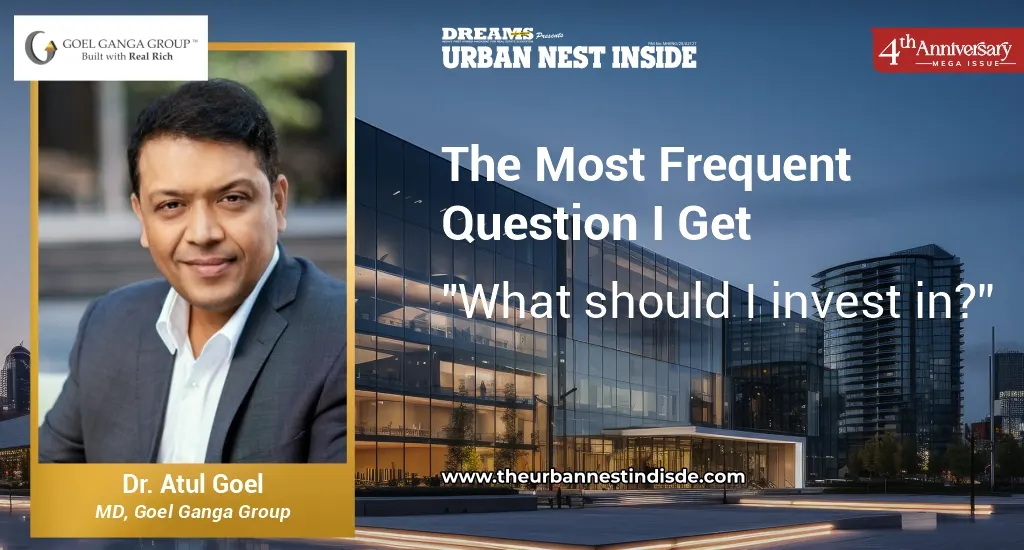
New Year Resolution Being Real Rich Through Real Estate It’s that time of the year again. It’s the start of another year when most of us make resolutions. From professional growth to healthy habits, wealth creation to pursuing hobbies that matter, resolutions are varied. If you ask me, one resolution stands above all else: Being Real Rich. What does being Real Rich mean? It means creating abundance in the real, sustainable sense. It means creating wealth that endures, grows, and adds value. The question that must be coming to your mind is: How does one do that? My answer is simple…Real Estate! Real estate has been the most trusted tool of wealth creation since time immemorial. Individuals became kings or emperors depending on the expanse of land they could acquire. The story has not changed much even now. Real estate, approached thoughtfully, is one of the best tools for wealth creation. When we talk about “Being Real Rich”, that is, the creation of sustainable wealth, the process goes beyond short-term gains and speculative investments. It is about making informed decisions in identifying assets that would appreciate. Real estate aligned with future-ready urban planning and responsible development consistently outperforms and delivers returns to investors. One key factor in this is how patient and disciplined one is. Creating sustainable wealth requires resisting quick temptations. It rather means focusing on properties with strong fundamentals – clear titles, quality construction, trusted developers with legacy, etc. Nurtured over time, capital appreciation, tax rebates, and rental yields from real estate create wealth that is truly sustainable. Data shows that India’s real estate industry is experiencing an exponential growth. It is expected to reach USD 1 trillion in 2030. From residential to hospitality, commercial space to infrastructure, the sector is contributing immensely to our country’s growing needs. Experts predict it will contribute about 15.5% to India’s GDP by 2047. In short, India is being built, and this is every investor’s opportunity to invest and create sustainable wealth that makes one Real Rich. It is not an insurmountable task at all. All you need is capital, which is only 10-15% of your asset’s total value. If you wish to test the waters before taking the plunge, the best way is to invest through Real Estate Investment Trusts (REITs), which are designed to make real estate investing accessible to smaller investors. 2026 is indicating a wonderful growth in real estate. Your time is NOW! Create assets that sustain. Create a legacy of Being Real Rich. Dr. Atul Goel MD, Goel Ganga Group

Being Real Rich Through Real Estate Read More »

UNLOCKING URBAN POTENTIAL

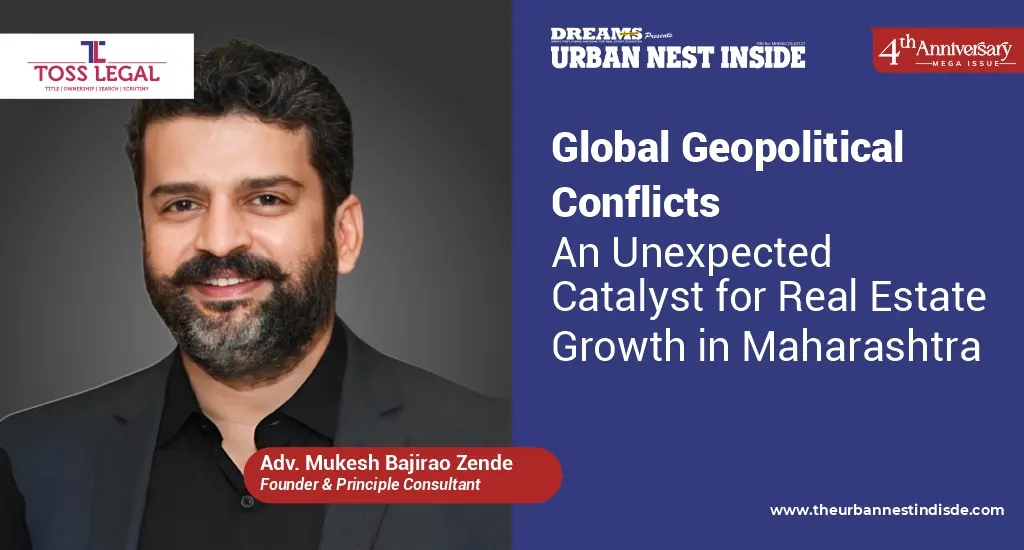
The Positive Impact Of Maharashtra’s Land Reform The Maharashtra Government’s recent decision to amend the stringent provisions of the Maharashtra Prevention of Fragmentation and Consolidation of Holdings Act, 1947 (commonly known as the Fragmentation Act) for urban and non-agricultural areas marks a historic, pragmatic, and citizen-centric reform. This long-awaited amendment seeks to regularise nearly six decades of land transactions that existed in a legal grey zone, offering relief to millions of property holders while providing a much-needed stimulus to the State’s real estate ecosystem and planned urban development. Originally, the Fragmentation Act was enacted with a clear and progressive intent to prevent agricultural land from being divided into uneconomically small parcels, thereby ensuring efficient and sustainable farming practices. However, as Maharashtra underwent rapid urbanisation, particularly around major cities and emerging development corridors, the rigid application of this agricultural-centric law in urban and semi-urban areas became increasingly impractical. Land that had long ceased to be agricultural in nature continued to be governed by restrictions meant for rural farming, resulting in widespread legal inconsistencies. For decades, citizens purchased small plots, often measured in Gunthas, for residential or small commercial use. Although such transactions were commonplace and socially accepted, they technically violated the Fragmentation Act. Consequently, these transactions could not be properly reflected in the crucial 7/12 land records, frequently carrying adverse remarks indicating violation of the Act. This led to chronic ownership uncertainty, preventing property holders from obtaining clear title, accessing institutional finance, or freely transferring their assets. The recent amendment decisively addresses this historical imbalance. By permitting free regularisation of transactions carried out between 15 November 1965 and 15 October 2024, the Government has taken a bold step towards legal clarity and social justice. Approximately 59 to 60 lakh families are expected to benefit, as rightful ownership will now be formally recognised through updated land records, removing decades-old legal stigma attached to such properties. The ripple effects of this reform are significant. Clear and marketable titles will unlock substantial “dead” or trapped capital, enabling property owners to sell, mortgage, or develop their land without fear of legal impediments. This, in turn, will enhance liquidity, transparency, and confidence in the real estate market, particularly in rapidly developing regions governed by planning authorities such as PMRDA and MMRDA. From an urban planning perspective, the amendment aligns land law with ground realities. By exempting non-agricultural land within planned development zones, the Government is encouraging lawful, organised growth while discouraging informal and unauthorised constructions. Equally important is the administrative impact, waiving earlier penalties of up to 25% of market value reduces bureaucratic friction, discourages rent-seeking practices, and promotes voluntary compliance. Economically, the reform is expected to generate long-term benefits through increased stamp duty collections, property tax revenues, and enhanced investment confidence. While some concerns have been raised about indirect benefits to developers, the overarching objective remains citizen welfare and regulatory rationalisation. Ultimately, this amendment represents a decisive shift towards citizen-centric governance and modern land administration. Its success will depend on transparent implementation and robust standard operating procedures by the Revenue Department. If executed effectively, this reform has the potential to redefine urban land governance in Maharashtra and set a benchmark for other states to follow. Adv. Mukesh B. Zende B. Sc. LL.B. MBA, (Corporate Law) Patent Attorney On Record +91 98222 68068 adv.mukessh@tosslegal.com

UNLOCKING URBAN POTENTIAL Read More »

Phinix Presents Swar Sandhya: A Musical Evening that Touched Every Heart

Phinix Constructions presented Swar Sandhya on Sunday, 23rd November 2025 at Balshikshan Auditorium, Pune, offering audiences an enchanting evening filled with melody, rhythm, and emotion. The three-hour musical program received an overwhelming response, as music lovers, clients, and well-wishers gathered to celebrate art, culture, and togetherness. The event featured a soulful blend of Marathi and Hindi music, including devotional compositions, lavani, duets, and evergreen film melodies. Each performance was presented with passion, preparation, and finesse, creating a captivating atmosphere that kept the audience engaged throughout the evening. Company Director Mr. Swanand Jawlekar delivered a remarkable performance on the tabla and dholki, earning special applause for his energetic and expressive playing. He was accompanied by Amit Kunte on tabla, adding rhythmic depth to the musical experience. The ensemble also featured Atharva Kelkar on octopad and rhythm machine, Sampada Deshpande and Amruta Jawlekar on harmonium, and Adwait Kulkarni and Onkar Patankar on keyboard, collectively creating a rich and vibrant musical backdrop. Talented vocalists Rasika Joshi, Rajashree Tamhankar, Swara Jawlekar, Abhijeet Wadekar, and Lalit Deshpande enthralled the audience with heartfelt performances that beautifully expressed emotion and artistry. The program was gracefully hosted by Veena Kelkar, whose warm narration added elegance and continuity to the evening. Before the interval, Mr. Jawlekar shared insights into his entrepreneurial journey and introduced the audience to the group’s business ventures — Phinix Constructions, Realfacts Consultants, Vyankatesh Developers, and Chintamani Service Bureau — all of which supported the event as co-organizers. Founded in 2005, PHINIX has emerged as a reputed and trusted name in the construction sector, successfully executing a wide spectrum of projects including bungalows, residential schemes, industrial and commercial developments, institutional works, renovations, extensions, and structural strengthening projects. Guided by integrity, quality workmanship, and timely execution, Phinix continues to set benchmarks in project delivery and client satisfaction. Mr. Jawlekar’s strong academic foundation — with qualifications in Civil Engineering, Construction Management, Housing Law, and specialized training in Plumbing Construction Management — further strengthens the organization’s professional vision and leadership. Swar Sandhya received wholehearted support from clients, partners, friends, and music enthusiasts, making the evening truly memorable. Phinix Constructions and its associate companies extended sincere gratitude to all artists, supporters, and attendees. With its harmonious blend of music, culture, and togetherness, Swar Sandhya once again left an unforgettable impression on every heart present. Swanand Jawlekar Director, Phinix Constructions swanandjawlekar@gmail.com +91 98812 22668 www.phinixconstructions.com  

Phinix Presents Swar Sandhya: A Musical Evening that Touched Every Heart Read More »

GET IN TOUCH
Scroll to Top