
Real Estate Magazine

News Room

Over 50,000 Real Estate Agents Now Registered with MahaRERA

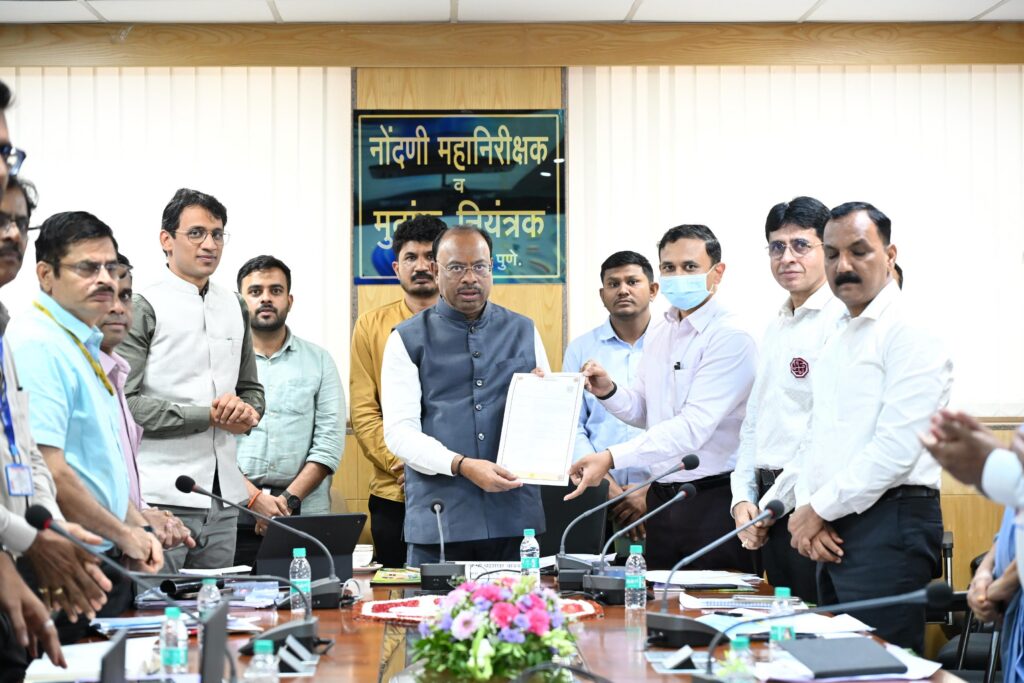
Mumbai, 19th May 2025: Subsequent to over 50,000 projects being registered with the Maharashtra Real Estate Regulatory Authority (MahaRERA), now, more than 50,000 agents are registered with the regulator. The agents registered with MahaRERA are not only from Maharashtra, considering the numero uno position of the real estate sector of the Mumbai Metropolitan Region and Pune, but also from major cities of several other states. Agents from as many as 150 other cities such as New Delhi, Gurgaon, Prayagraj, Hyderabad, Bengaluru, Kanchipuram, Nainital, Goa, Ahmedabad, Patna, Jammu, Indore, among others have got themselves registered with MahaRERA. These many registered agents from other states demonstrate the pivotal role they play in the realty industry, as they facilitate sale between a developer and a homebuyer. Similar to the most number of housing projects registered in Maharashtra, the state also leads in the highest number of registered agents in India. Currently, there are 50,673 agents registered with MahaRERA. Of these, registration of 31,980 agents is active and 18,693 agents have been de-registered by MahaRERA for varied reasons. As is the trend, Konkan area, which includes the Mumbai Metropolitan Region, has the highest number of registered agents at 21,050. This is followed by the Pune area with 8,205 registered agents, 1,504 registered agents in the Nagpur area, 490 in North Maharashtra, 343 in the Sambhajinagar area and 237 in the Amravati area. In the real estate sector, a real estate agent also known as a consultant, plays a pivotal role. They serve as an important link between the homebuyer and the developer. Often, the homebuyers first get in touch with an agent, who in turn guides the purchaser by providing basic information about multiple housing projects. Considering this crucial role of the agents, all of them are mandated to be aware of the important provisions of the Real Estate (Regulation and Development) Act, 2016. Agents are supposed to provide the customer with basic information on regulatory provisions such as the Model Sale Agreement, Allotment Letter, Carpet Area, Defect Liability Period, etc. This helps in ensuring there is uniformity, consistency and clarity during sale of a property. Based on such details homebuyers make a decision to buy a house in a specific project or not. Therefore, keeping in mind the interests of homebuyers, MahaRERA has made this training and certification of agents mandatory. Of the 18,693 de-registered agents, some have not obtained this certificate while others have not renewed their licenses, hence, their termination of their registration. AREA WISE REGISTERED AGENTS IN MAHARASHTRA Konkan Area – 21,050 Mumbai City – 3,457 Mumbai Suburb – 8,365 Thane – 6,760 Raigad – 1,340 Palghar – 1,086 Ratnagiri – 31 Sindhudurg – 11 Pune Area – 8,205 Pune – 7,931 Kolhapur – 84 Satara – 76 Solapur – 70 Sangli – 44 Nagpur Area – 1,504 Nagpur – 1,357 Chandrapur – 57 Bhandara – 45 Gondia – 40 Gadchiroli – 5 North Maharashtra Area – 490 Nashik – 324 Ahilyanagar – 92 Jalgaon – 53 Dhule – 19 Nandurbar – 2 Sambhajinagar Area – 343 Sambhajinagar – 132 Beed – 68 Latur – 46 Nanded – 37 Dharashiv – 27 Parbhani – 14 Jalna – 11 Hingoli – 8 Amravati Area – 237 Wardha – 95 Amravati – 48 Akola – 36 Buldana – 29 Yavatmal – 27 Washim – 2

Over 50,000 Real Estate Agents Now Registered with MahaRERA Read More »

First 5 Plots @ ₹999/sq.ft – A Nature-Infused Investment Opportunity Near Pune

PMRDA-Sanctioned Residential NA Plots in Vede Village, Near Urawade Pune, Maharashtra – In a market where the search for peace and open space increasingly drives real estate choices, Sigma One Developers in collaboration with DreamWorks Realty proudly announces the launch of Siddeshwar Harita and Kshitijvan – a serene, gated plotting project nestled in the Sahyadri Hills near Pune. Strategically located in Vede village, just an hour’s drive from Chandni Chowk and approximately 30 km from Pirangut, the project offers excellent connectivity to Lavasa and Hinjewadi IT Park, key development nodes in West Pune. The area is poised for significant growth with infrastructure projects such as the Pune Ring Road and upgraded state highways in the pipeline. What sets this project apart is its PMRDA-sanctioned Residential NA status, clear legal titles, and full development approvals—making the plots ready for immediate construction. Plot sizes range from 3,028 to 4,736 sq. ft.*, catering to weekend home buyers, future retirees, and savvy investors. Introductory Offer: In a special launch initiative, the first five plots are being offered at a limited-time price of just ₹999 per sq. ft., translating to around ₹35 lakh for select plots. This represents a rare opportunity to invest in a rapidly appreciating location at an unbeatable price. “This project brings together the rare combination of nature, legality, and long-term value,” said Viraj Bhagwat, Director at DreamWorks Realty. “From second homes to Airbnb rentals and future retirement plans, these plots offer versatile potential.” More than just an investment, Siddeshwar Harita and Kshitijvan offer a harmonious lifestyle. The site includes internal roads, gated security, electricity and water supply, and is surrounded by lush greenery with a local temple nearby. It’s an ideal setting for those looking to build a peaceful retreat without straying far from city life. DreamWorks Realty ensures end-to-end support for buyers—including assistance with plot selection, legal documentation, construction services, and resale guidance. Interested buyers can attend virtual presentations or book a site visit by contacting: Viraj Bhagwat – ‪+91 96045 88828‬ Aryan Pawar – ‪+91 99604 38414‬ Email: info@dreamworksrealty.co.in For anyone seeking a smart investment or a soulful escape from the city, Siddeshwar Harita and Kshitijvan offer a unique blend of value, tranquility, and growth potential.

First 5 Plots @ ₹999/sq.ft – A Nature-Infused Investment Opportunity Near Pune Read More »

Exploring War’s Effects on Indian Real Estate – When Conflict Meets Concrete

Mumbai, 9th May 2025: War rarely leaves anything untouched, especially not real estate. We may not necessarily be talking about decimated buildings – though those must be factored in within the actual conflict zones. Armed conflicts generally have a negative effect on economies, except if a country has reconfigured itself as a ‘war economy’. Such economic reinvention happens only during protracted wars and comes with several human costs. Wars also stall construction and dampen end-user and investor confidence. Aspiring homebuyers put decisions on hold. Retailers put a brake on their expansion plans, and tourists postpone their travel plans. Real estate markets adapt, pause, and then bounce back. If we consider India’s last two most significant military engagements — the Indo-Pak war in 1971 and the Kargil war in 1999, we saw this process unfold in all the four critical real estate sectors: residential, commercial, retail, and hospitality. War – The ‘Real’ Impact War creates several economic effects and side-effects which impact the real estate market in different ways: Reduced end-user and investor confidence – Homebuyers delay purchases, businesses delay office leases, and investors seek safer havens like gold (and, these days, cryptocurrencies) Raw materials get scarce – The key inputs for construction – steel and cement – may be diverted to fortify the country’s defence infrastructure, and/or see steep price hikes Government spending pivots – Governments will spend more on its military and reduce spending on infrastructure and consumer real estate Capital values may take a hit – While armed conflicts do not impact rentals much, housing capital values may reduce because of lower demand 1971 Indo-Pak War: Construction Screeches to Standstill The 13-day conflict in December 1971 did a lot more than redraw India’s borders — it brought the country’s economy to a virtual standstill. There was a huge dip in GDP growth – from 5.4% in FY1970 to 1% in FY1972. Simultaneously, inflation spiked beyond 11% and construction was largely restricted to military sites. Impact on the Housing Market In the financial capital of Mumbai – then Bombay – the state government put an iron grip on cement and steel, which resulted in a 12% reduction in the approval of housing projects. Thankfully, the rent control laws remained unyielding, so housing rental rates did not spike even though inflation raged out of control. Not surprisingly, property registrations in the city reduced by almost 10% in 1971. Impact on Commercial Real Estate There were no FDI inflows worth mentioning, the development of private office spaces came to a grinding halt. Locations like Mumbai’s Fort area and Delhi’s Connaught Place saw massive vacancy rates – however, office rentals did not sink because of the limited supply, and due to inflexible regulations. Impact on Retail Real Estate Back in 1971, India’s high-street retail scene was mostly unorganised and uncharted, but local shops in Old Delhi and Kolkata saw a significant drop in footfalls. According to available court records from 1971, shop rent disputes in Mumbai rose by 18% due to increased stress among tenants. Impact on Hospitality Real Estate Unsurprisingly, tourism in India was impacted by the war. From 2.02 million in 1970, Foreign Tourist Arrivals (FTAs) reduced to 1.96 million in 1971. In Delhi, hotel occupancy dropped to under 45% and even the hospitality major of the day – the Indian Hotels Company – saw revenues drop in double-digits, especially in areas that were directly affected by the way – especially Srinagar. The 1999 Kargil War: A Short but Hard Impact The Kargil standoff, which latest three months, resulted in considerable short-term market panic. However, India’s economy was liberalised and far more resilient by then, and recovered quickly. Impact on the Housing Market The 1999, the country’s real estate market was already reeling under the impact of the Asian financial crisis. This time, housing rental values did take a direct hit – in Delhi and Mumbai’s prime residential locations, rental values plummeted by anywhere between 3–8% in these three months and bottomed out by 1999-end. Interestingly, despite the conflict and all its ramifications, luxury apartments in Mumbai’s Cuffe Parade still commanded then-handsome prices of between INR 20,000-23,200/sq.ft. Impact on Commercial Real Estate 1999 saw approx. 4.8 million sq. ft. of new office space hitting the main cities. In CBDs like Connaught Place, vacancies increased anywhere between 11-15% and rentals dropped marginally. Large international companies did not cancel their leases, but did defer them in most cases. Back then, Bengaluru was not yet India’s fully-established Silicon Valley, but places like Koramangala had full-fledged IT parks which saw undeterred leasing at rents ranging between INR ₹35–65/sq. ft./month. Impact on Retail Real Estate The Kargil war coincided by the finishing touches being made to the country’s pioneering malls – Mumbai’s Crossroads and Delhi’s Ansal Plaza. Premium retail real estate, a shiny novelty in 1999, commanded higher rents than commercial real estate, but the conflict prompted most enlisted retailers to put their store openings on hold. Impact on Hospitality Real Estate Surprisingly, except in the directly affected regions, the tourism industry remained remarkably robust. 1999 saw a 5.3% increase in Free Trade Agreements (FTAs), thanks largely due to the then-incumbent government’s push to tourism and also a subdued rupee. North India saw spiralling hotel cancellations to the tune of anywhere between 20–30% in these three months. Hotels in Delhi and Kashmir took a major body blow, with MICE bookings getting cancelled en masse. Interestingly, Kargil became a popular tourism destination after peace was restored and by 2003, saw its tourist footfall double to 44,000/year over the pre-war numbers. Real Estate Resilience – What Lies Beneath India’s real estate market benefited from three major factors after both these wars – pent-up demand (the need for homes and offices obviously continued), stricter regulations (RBI’s conservative lending norms kept leverage low, which helped curtail panic), and quick stock market recover. While the Nifty dropped approximately 5% at various points of these two conflicts, it snapped back within 5-6 months to deliver positive returns. Today – The

Exploring War’s Effects on Indian Real Estate – When Conflict Meets Concrete Read More »

Housing projects registered with MahaRERA have crossed 50,000 mark

Mumbai, 8th May 2025: With the Maharashtra Real Estate Regulatory Authority (MahaRERA) recently completing 8 years of existence and entered it’s 9th year, the total number of housing projects registered with the state’s regulator has surpassed the 50,000 mark. This makes Maharashtra the only state in India to cross the 50,000 registered residential projects mark. Currently, a total of 50,162 housing projects are registered with MahaRERA. The distant second is Tamil Nadu with 27,609 housing projects, followed by Gujarat with 15,322 residential developments. MahaRERA Chairman Manoj Saunik said, “The total number of housing projects registered with MahaRERA, which has recently completed its 8th year and entered 9th year, has surpassed 50,000. This is a moment of achievement for the industry-friendly and ever-progressing Maharashtra. Until a few years ago, the real estate sector, which was largely limited to the Mumbai Metropolitan Region or Pune region, but now it is expanding all across the state. The consistently increase in the demand for houses across Maharashtra is an indicator of state’s social and economic development. While legally empowering homebuyers, the MahaRERA also ensures that the grievances are equal to negligible. MahaRERA strives to ensure homebuyers do not have any grievances.” In India, only these three states have the housing projects in five figures. According to the statistics on the Ministry of Housing and Urban Affairs website, a total of 1,44,617 housing projects have been approved by all the RERA bodies in the nation. Maharashtra alone accounts for over one-third or about 35% of the total housing projects in India. MahaRERA was established in 2017 to regulate the real estate sector in the state. Maharashtra was one of the first state to set up the regulatory authority under the Real Estate (Regulation and Development) Act, 2016. Recently MahaRERA celebrated its eighth anniversary of formation. Of the total 50,162 projects in Maharashtra, 12,788 housing projects are alone in Pune district, followed by 6,746 in Thane district, 5,907 in Mumbai suburbs and 5,360 in Raigad district. Konkan region, which includes the Mumbai Metropolitan Region (MMR), has the highest number of residential projects at 23,770. This is followed by 15,932 in the Pune region, 4,621 in North Maharashtra, 2,764 in Nagpur area, 1,886 in Chhatrapati Sambhajinagar region and 957 in Amravati region. District-Wise Projects Konkan Region – 23,770 Mumbai City – 1,284 Mumbai Suburban – 5,907 Thane – 6,746 Raigad – 5,360 Palghar – 2,899 Ratnagiri – 1,087 Sindhudurg – 487 Pune Region- 15,932 Pune – 12,788 Satara – 1,088 Kolhapur – 785 Sangli – 757 Solapur – 514 North Maharashtra Region – 4,621 Nashik – 3,854 Ahilyanagar – 455 Jalgaon – 230 Dhule – 65 Nandurbar – 17 Nagpur Region – 2,764 Nagpur – 2,497 Chandrapur – 218 Bhandara – 36 Gadchiroli – 10 Gondia – 3 Chhatrapati Sambhajinagar Region – 1,886 Chhatrapati Sambhajinagar – 1,385 Latur – 136 Nanded – 97 Jalna – 93 Beed – 93 Dharashiv – 46 Parbhani – 29 Hingoli – 07 Amravati Region- 957 Amravati – 423 Wardha – 280 Akola – 112 Yavatmal – 61 Buldana – 54 Washim – 27 Dadra Nagar Haveli – 180 Daman – 52

Housing projects registered with MahaRERA have crossed 50,000 mark Read More »

Real Estate Professionals High-Powered Networking Event

Pune, Maharashtra — May 7, 2025 — Pune’s thriving real estate sector is set to witness a major networking opportunity as industry professionals gather for “Connect and Collaborate”, a high-impact event designed to foster strategic partnerships and cross-industry collaboration. The event will take place on Thursday, May 8, 2025, at 4:00 PM in Baner, Pune. Conceptualized by Siddharth Chincholikar, the initiative brings together a diverse group of stakeholders from the real estate and construction ecosystem, including builders, architects, realtors, project consultants, interior designers, material suppliers, legal advisors, financial experts, and more. “In a market that’s evolving rapidly, collaboration is not just a strategy—it’s a necessity. We believe the best way to kill competition is to co-create and grow together,” Siddharth Chincholikar, Founder and Organizer. With a focus on organic, meaningful interaction, Connect and Collaborate promises an environment conducive to knowledge sharing, resource exchange, and joint venture exploration. Attendees can expect engaging discussions, B2B networking, referral opportunities, and the potential for long-term professional relationships that drive growth and innovation. This gathering serves as a dynamic platform for both established professionals and new entrants looking to integrate into Pune’s collaborative property network. Event Details: Date: Thursday, May 8, 2025 Time: 4:00 PM onwards Location: Venue in Baner, Pune Contact: 8888999504 Whether you’re a seasoned real estate veteran or an emerging player in the sector, Connect and Collaborate offers an invaluable opportunity to be part of a movement that champions unity, synergy, and shared success. Join the conversation. Connect. Collaborate. Create the future of Pune real estate.

Real Estate Professionals High-Powered Networking Event Read More »

GBN Group Hosts Inaugural 1-2-1 Aabha Conclave in Pune, Facilitates 150+ One-on-One Business Meetings

Pune, 7th May 2025: After three successful editions in Kolhapur since 2022, the GBN Group brought its flagship business networking event — the 1-2-1 Aabha Conclave — to Pune for the first time. The full-day event took place at Hotel TipTop International, Wakad, from 9:00 AM to 7:00 PM on May 6. Unlike conventional business summits, the conclave was designed as a pure networking platform with no stage sessions or keynote speeches. Instead, it focused entirely on one-on-one business meetings, enabling participants to connect directly, exchange referrals, and explore collaboration opportunities. The Pune edition witnessed over 150 one-to-one meetings in a single day, reflecting the conclave’s growing impact and relevance. What sets GBN Group apart is its no annual membership fee policy, making it the only business networking group of its kind. By eliminating financial barriers, GBN has built an inclusive community where entrepreneurs and business owners can foster meaningful, growth-oriented relationships. The 1-2-1 Aabha Conclave Pune delivered a high-energy, distraction-free environment tailored for authentic business engagement.

GBN Group Hosts Inaugural 1-2-1 Aabha Conclave in Pune, Facilitates 150+ One-on-One Business Meetings Read More »

GET IN TOUCH
Scroll to Top