Real Estate Magazine

News Room

kamathipura 222817225 16x9 0

Mumbai’s Kamathipura Set For Major Redevelopment From Diwali

Mumbai, 18th September 2026: The long-awaited redevelopment of Kamathipura has moved closer to implementation after the Maharashtra Housing and Area Development Authority (MHADA) signed an agreement with a consortium of developers for the transformation of the historic South Mumbai neighbourhood. The agreement between MHADA and the consortium comprising Bhagirathi Housing Pvt Ltd and Maathi Developers Pvt Ltd covers around 34 acres of Kamathipura. The redevelopment will be carried out under the cluster redevelopment model, with work expected to begin around Diwali. The project covers 475 cessed buildings and 249 non-cessed buildings across Lanes 1 to 15. It also includes 14 religious places and two civic-run schools. Around 8,001 residents, tenants and commercial occupants, along with nearly 800 landlords, are covered under the project. MHADA has been appointed as the nodal agency and special planning authority for the redevelopment under Regulation 33(9) of DCPR 2034. A draft master plan is expected to be submitted in mid-October, while a project feasibility committee will work on determining eligibility and securing the required consent from residents and landowners. For eligible residential tenants, the redevelopment plan provides flats measuring 500 sq ft. The project is also expected to generate around 44,000 sq m of housing stock for MHADA, through which approximately 900 additional housing units are proposed. Beyond housing, the plan includes commercial spaces, public amenities, recreational and green areas, internal roads, transportation facilities and upgraded urban infrastructure. Kamathipura, established in the late 18th century as a settlement for construction workers known as ‘kamathis’, has undergone several transformations over the decades. The area later became known for its red-light district and is today characterised by ageing chawls, dense lanes and deteriorating structures. The redevelopment therefore represents a major physical transformation of one of Mumbai’s most historic neighbourhoods. MHADA has said that the project will focus on improving safety and quality of life while retaining Kamathipura’s historic identity, with citizen participation and transparency forming part of the implementation process.

Mumbai’s Kamathipura Set For Major Redevelopment From Diwali Read More »

PuneMahada

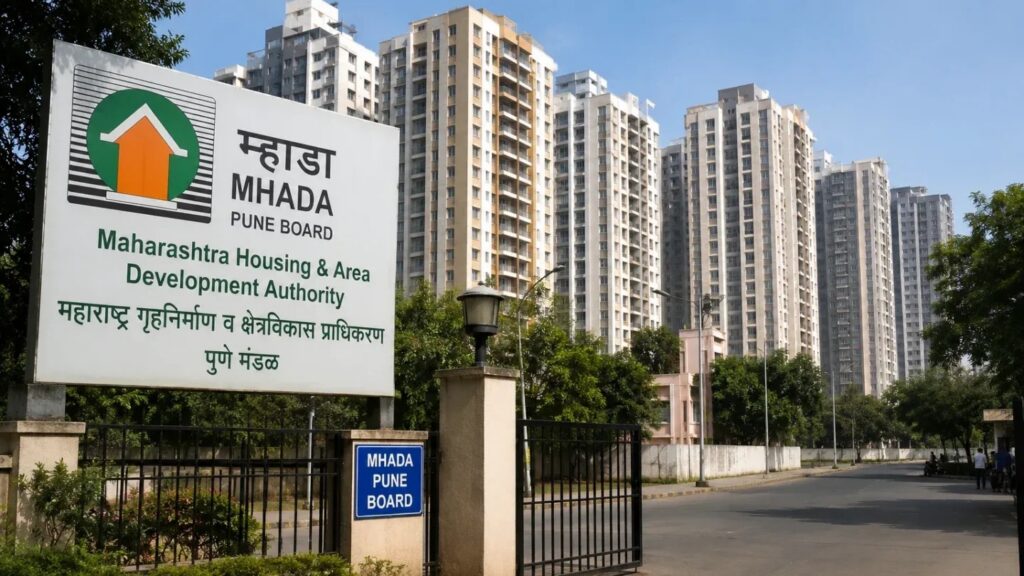
MHADA extends Pune lottery deadline to Oct 15 after verification delays

Pune, 11th September 2026: The Maharashtra Housing and Area Development Authority (MHADA) has extended the application deadline for its Pune lottery of 4,462 flats by one month, moving the last date to October 15. The extension covers schemes in Pune, Pimpri-Chinchwad and areas under the Pune Metropolitan Region Development Authority (PMRDA). More than 50,000 applications have been received so far for the 15% social housing and 20% inclusive housing categories, which were opened for online applications on August 24. Under the process, applicants’ domicile certificates and income documents are verified online by the respective authorities, while Income Tax Returns (ITRs) are validated by the Income Tax Department. However, delays in these verifications prevented many applicants from completing subsequent stages, including payment of the earnest money deposit. Citing the difficulties faced by applicants, MHADA Pune Board chairman Shivaji Adhalrao-Patil announced the one-month extension. The lottery offers 4,462 tenements across 168 scheme codes, with 2,971 flats under the 20% inclusive housing scheme and 1,491 under the 15% social housing scheme. Earlier timelines had set September 15 as the last date for applications and October 13 for the computerised draw. Applicants can now submit forms and complete formalities until 11:59 pm on October 15, 2026

MHADA extends Pune lottery deadline to Oct 15 after verification delays Read More »

NashikMahada

MHADA Nashik Housing 2026: 324 Homes On Sale From ₹11 Lakh, Applications Open Till September 12

Nashik, 9th September 2026: Homebuyers looking for more affordable housing options in Nashik now have another opportunity, with the Maharashtra Housing and Area Development Authority (MHADA) putting 324 homes on sale across the Nashik region. The homes are priced between ₹11 lakh and ₹27 lakh and are being offered on a First Come, First Served (FCFS) basis rather than through the conventional lottery process. The homes are spread across several locations in and around Nashik, including Makhmalabad, Satpur, Vihitgaon, Sinnar Phata, Pathardi, Mhasrul, Agar Takli, Gangapur, Deolali, Chehedi, Mery-Rasbihari Link Road and Adgaon. For those interested in applying, the online registration and application process has opened on September 9, 2026, and will remain open until 11:59 pm on September 12. The online process for payment of the earnest money deposit (EMD) and selection of the housing scheme is also available during this period, beginning at 11 am on September 9. Applicants who successfully select a tenement will have to pay the prescribed administrative charges within 48 hours of making the selection. The sale is being conducted under MHADA’s 20 per cent Inclusive Housing Scheme, with the vacant tenements being offered through the FCFS system. Applications are to be submitted through MHADA’s official Book My Home portal. Unlike a lottery, the FCFS system means that applicants are considered on the basis of when they complete the required process and select an available home. MHADA has used this model previously, including for homes in Mumbai that remained unsold after being offered through earlier lottery schemes. MHADA has also issued a warning to applicants about possible fraud. The Nashik Board has clarified that it has not appointed any representative, consultant or property agent for the sale or distribution of these homes. Applicants have therefore been advised not to make financial transactions with anyone claiming to sell the homes or applications on MHADA’s behalf. The authority has said it will not be responsible for unauthorised transactions or fraudulent activity carried out by such individuals. MHADA has asked applicants to report brokers or individuals found selling applications without authorisation, collecting money in the authority’s name or engaging in fraudulent activity to its Chief Vigilance and Security Officer at 022-66405448. With the application window closing on September 12, prospective buyers will need to check the available homes, locations, eligibility and payment requirements on the official MHADA portal before proceeding.

MHADA Nashik Housing 2026: 324 Homes On Sale From ₹11 Lakh, Applications Open Till September 12 Read More »

ThaneMetro

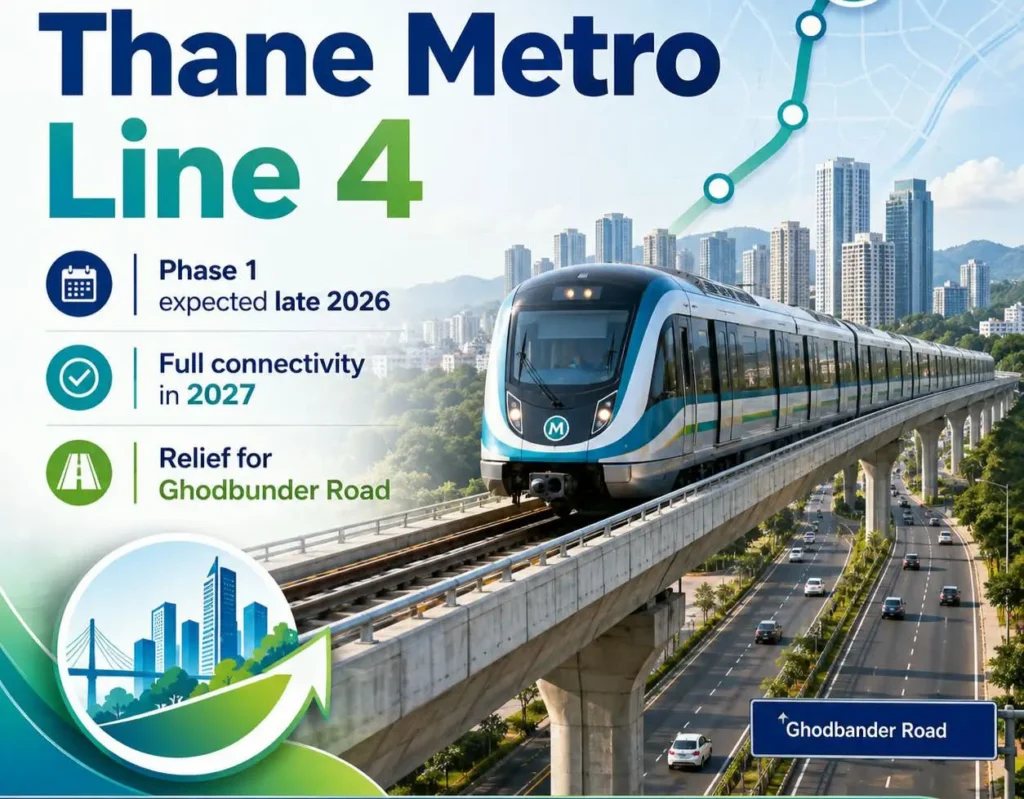
Thane’s First Phase From Gaimukh to Cadbury Junction Likely to Begin Operations in 2026

Thane, 4th September 2026: Thane’s first phase of Mumbai Metro Line 4/4A is now targeted to begin operations later in 2026, subject to the completion of final statutory clearances. The first phase will connect Gaimukh/Kasarvadavali with Cadbury Junction, marking a significant step towards improving public transport connectivity across Thane. The metro corridor is expected to provide an alternative to road-based travel, particularly for commuters using Ghodbunder Road. The route currently witnesses heavy traffic, especially during peak hours, resulting in longer travel times for daily commuters. With the first phase becoming operational, commuters could see a reduction in travel time and road congestion, while also benefiting from lower commuting costs compared to regular road travel. The development is particularly significant for residents and daily commuters travelling through the Ghodbunder Road corridor, where increasing traffic volumes have remained a major concern. The complete Metro Line 4 corridor, extending towards Mumbai, is expected to become operational progressively by 2027. However, the 2026 operational target for the first phase remains subject to the completion of statutory clearances and other required approvals. The actual start of passenger services will therefore depend on the completion of these formalities. The opening of the first phase would represent an important milestone for Thane’s expanding metro network and could provide commuters with an additional public transport option on one of the city’s busiest road corridors.

Thane’s First Phase From Gaimukh to Cadbury Junction Likely to Begin Operations in 2026 Read More »

constro2027 02

Constro 2027: Construction Expo To Bring 400+ Exhibitors Under One Roof

Pune, 3rd September 2026: Pune is set to host the 21st edition of Constro, a major construction industry exhibition, from January 7 to 10, 2027, at the Pune International Exhibition and Convention Centre (PIECC) in Moshi. The four-day exhibition is being organised by the Pune Construction Engineering Research Foundation (PCERF), a non-profit organisation established in 1983 to promote advancements in construction practices in India. PCERF works towards promoting innovation and sustainable technologies in the construction sector while facilitating knowledge exchange between academia, industry and government bodies. The organisation also conducts training programmes, seminars and exhibitions aimed at improving industry standards. Constro has been held since 1985 and has completed 20 editions. Over the years, the exhibition has provided a platform for construction companies, technology providers, equipment manufacturers and other industry stakeholders to showcase products and explore business opportunities. Constro 2027 will feature more than 50,000 square metres of exhibition space and over 400 booths. The organisers expect more than 40,000 professional visitors from India and abroad during the four-day event. The exhibition will focus on construction technologies, sustainable materials, equipment and other solutions used across the construction sector. It is also expected to bring together industry professionals, decision-makers and businesses involved in construction and related fields. For companies looking to participate, indoor stalls in the air-conditioned hall are available in sizes of 4m x 3m (12 sq m) and 6m x 4m (24 sq m). The listed rate for indoor stalls is Rs 14,000 per sq m. An early bird discount of 20 per cent is available on indoor stall bookings until September 15, 2026. Outdoor open stalls are available in a 5m x 5m (25 sq m) format at a listed rate of Rs 7,500 per sq m. These stalls are also eligible for the 20 per cent early bird discount until September 15. For open spaces measuring more than 200 sq m, the flat rate is Rs 4,500 per sq m. The organisers have also made the updated exhibition layout available online for exhibitors planning their participation. With the construction sector continuing to adopt newer technologies, materials and equipment, Constro 2027 will provide a platform for companies and professionals to display products, meet industry stakeholders and explore developments in the sector. Constro 2027: Contact Details Contact Person: Sandip Shirke Mobile: +91 78430 37852 Constro Website: expo2027.pcerf.org

Constro 2027: Construction Expo To Bring 400+ Exhibitors Under One Roof Read More »

GurugramFlood

Why The City Needs A New Model To Fund Drainage Infrastructure

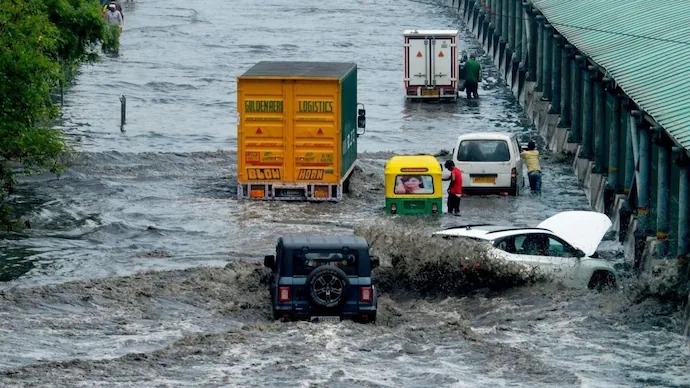
Gurugram, 3rd September 2026: Gurugram’s recurring flooding and waterlogging have raised questions over whether the city’s existing approach to infrastructure planning and funding is sufficient to deal with the scale of its rapid urban growth. Despite investments in drains, pumps and diversion channels, several parts of Gurugram continue to face severe waterlogging during intense spells of rain. The issue was highlighted again on August 24, when around 80 mm of rainfall led to heavy waterlogging on Sohna Road and adjoining areas, with traffic coming to a standstill and several school buses getting stuck. The problem is not limited to the absence of drainage infrastructure. Officials and experts have pointed to gaps in the existing network, blocked road gullies, disrupted natural water channels and the way the city has expanded over the years. In one recent instance, the Gurugram Metropolitan Development Authority (GMDA) found that gaps in a gate at the junction of Leg 3 of the Badshahpur drain and Leg 4, the stormwater drain along the Southern Peripheral Road, along with a delay in fully closing the gate, contributed to flooding on Sohna Road. The Leg 4 drain had been constructed at a cost of more than Rs 100 crore to divert excess water. At Subash Chowk, blocked road gullies prevented water from entering the drainage system. The master stormwater drain also takes a sharp turn because of an underpass, creating another bottleneck for water movement, according to the report. The recurring flooding has also prompted the Municipal Corporation of Gurugram (MCG) to undertake catchment and drain mapping in areas including Subash Chowk, internal sectors and licensed colonies. The exercise is aimed at understanding how rainwater moves through the drainage network and identifying locations where drains require repairs or additional capacity. The MCG is also working on a simulation model to identify drainage bottlenecks. Officials are considering measures including rainwater harvesting, groundwater recharge, injection wells and additional stormwater lines in narrow lanes and low-lying areas. Technical experts from IIT Gandhinagar are also being consulted, while 273 locations have been identified for rainwater harvesting systems. However, the scale of the infrastructure required raises another question: how should Gurugram pay for it? The city’s development has been driven significantly by private real estate investment, with large residential, commercial and office developments expanding across the region. At the same time, major infrastructure such as roads, drainage, sewage and water systems remains largely dependent on public agencies. One possible approach is a greater role for public-private partnerships (PPPs), where developers contribute towards infrastructure that serves larger urban catchments instead of limiting infrastructure investments to individual projects. Such a model could involve developers in a particular cluster contributing towards a common stormwater system or paying infrastructure impact charges linked to the additional pressure their projects place on existing roads, drainage and other civic infrastructure. Another option is the use of municipal bonds to raise funds for large infrastructure projects. Municipal bonds could potentially be used to finance projects such as stormwater drainage systems, detention ponds, sewage networks, water infrastructure and other long-term civic projects. However, such borrowing would require clearly defined projects, reliable revenue sources and systems to ensure that the funds are used for the intended infrastructure. The funding question becomes more important as Gurugram continues to expand. The city’s flooding problem is not simply about adding more drains, but about ensuring that the different components of its drainage network work together. Experts have also suggested that Gurugram needs to look beyond conventional concrete drainage infrastructure and restore natural water channels, ponds and other areas that can absorb and retain rainwater. Urban planners have pointed towards a combination of so-called blue-green infrastructure and conventional drainage systems. This includes ponds, wetlands, rain gardens, bioswales and permeable surfaces that can allow more rainwater to be absorbed into the ground instead of immediately entering stormwater drains. The approach is particularly relevant because rapid construction and concretisation have reduced the natural areas through which rainwater historically moved. Gurugram’s location below the Aravalli ridge also means that the city’s natural runoff patterns need to be considered while planning its drainage network. The recent flooding has therefore exposed a larger infrastructure challenge for Gurugram. The city has continued to add roads, buildings and commercial developments, but its drainage and water-management systems have struggled to keep pace. The answer may require a combination of public funding, private participation and long-term borrowing, along with better coordination between agencies such as the MCG and GMDA. For Gurugram, the immediate challenge remains preventing roads and key corridors from turning into flood zones during heavy rain. But the longer-term issue is ensuring that future development does not repeat the same infrastructure gaps. The city’s flooding crisis, therefore, is increasingly a question not only of drainage capacity but also of planning, coordination and how infrastructure for a rapidly expanding urban area is financed


Why The City Needs A New Model To Fund Drainage Infrastructure Read More »

GET IN TOUCH
Scroll to Top