
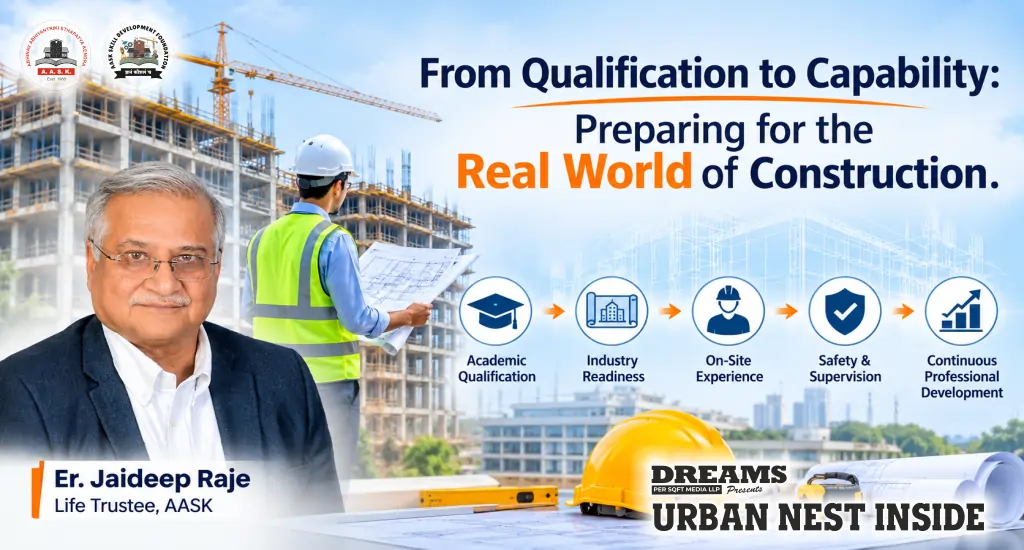
A civil engineering qualification marks an important milestone. It provides the technical foundation for entering the construction industry. Yet, on a real project, knowledge is only one part of the equation.
The transition from classroom to workplace brings a different set of demands. Drawings have to be interpreted in context, measurements have to be verified, activities coordinated, safety risks recognised and decisions made within practical constraints. The ability to connect these elements is what gradually turns a qualified graduate into a capable construction professional.
Bridging the Gap Between Knowing and Doing
For students and fresh graduates, this transition can be significant. An Industry Readiness Program can provide structured exposure to the expectations of professional practice—technical understanding, site processes, documentation, communication, coordination and workplace discipline.
The value of such exposure lies not simply in learning what happens on a construction project, but in understanding how different activities come together to deliver the work.
Growing with Responsibility
As professionals take on greater responsibility, the nature of competence changes. Construction Supervisor training develops an understanding of planning, execution, monitoring and control of site activities. Industrial Safety Supervisor training adds another essential dimension: recognising hazards, managing risks and promoting safe working practices.
These are not simply additional credentials. They represent different stages at which a professional must be able to take greater responsibility for people, processes and outcomes.
Continuous Learning, Closer to the Workplace
Professional development does not, however, end with a qualification. Construction methods, technologies and project requirements continue to evolve, creating a need for focused and continuous learning.
Masterclasses and workshops provide opportunities to explore specialised areas such as Digital Estimation, Valuation, Waterproofing, Plumbing, Rate Analysis and Advanced Formwork. The wider construction ecosystem also includes specialised functions such as RMC Plant Management and Construction Laboratory Administration, while internships can provide early exposure to actual site environments.
Learning can also move directly to the workplace. Customized training at construction sites and offices can address project-specific or organisational requirements, making professional development closely connected to actual working conditions.
The larger shift is therefore from viewing education as a qualification to viewing it as a continuing process of capability building.
A student may begin with industry readiness. A professional may then develop supervisory or safety expertise, pursue specialised knowledge, or adapt to emerging technologies. Different stages require different forms of learning.
The objective is not to make every construction professional an expert in everything. It is to help professionals understand their role, perform it competently, take responsibility and continue to grow.
Because in construction, a qualification may open the door—but capability is what builds a career.