

From Ancient Engineering to Viksit Bharat 2047
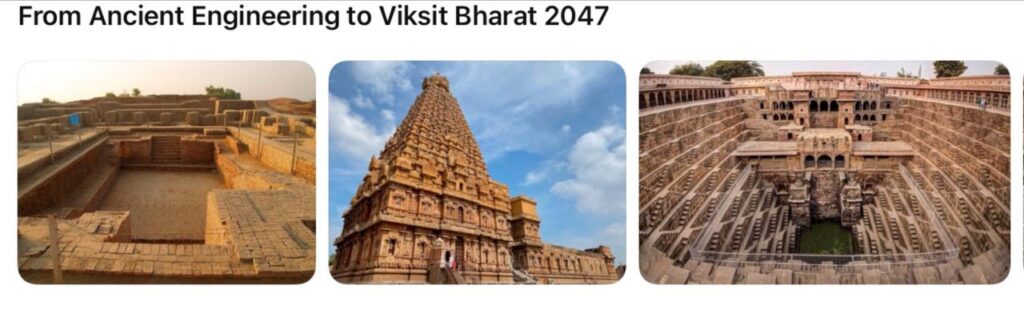
India’s construction heritage spans thousands of years of engineering knowledge and disciplined building. The cities of the Indus Valley Civilisation demonstrated remarkable standardisation in brick dimensions, drainage, water management and urban planning. Standardisation, therefore, formalises a long tradition of precision and disciplined execution.
During the British period, construction became more formally organised through Public Works Departments. Surveys, drawings, estimates, specifications, measurements and maintenance procedures established a common construction language. The PWD Schedule of Rates and the “Red Book” tradition subsequently influenced State PWDs and CPWD, creating foundations for documented and repeatable practices.
The evolution of scientific and industrial construction is reflected in Bharat Ratna Sir M. Visvesvaraya and Padma Shri B. G. Shirke. Visvesvaraya demonstrated the power of scientific engineering, systematic planning and innovation in irrigation, water supply and flood protection. B. G. Shirke advanced construction through precast and prefabricated systems, standardised components, mechanisation and quality control, showing that construction could become faster, economical and predictable.
After Independence, the Bureau of Indian Standards (BIS) and the National Building Code established a national framework for materials, structural design, safety, building services and construction practices. CPWD specifications further defined requirements for materials and workmanship. BIS’s SP 7:2026 — National Building Construction Standards 2026 continues this evolution.
Yet standards matter only when understood and implemented. Organisations such as the Builders’ Association of India (BAI), Pune Construction Engineering Research Foundation (PCERF) and professional bodies help disseminate knowledge, promote best practices, research, training and professional ethics. Academic institutions must connect education and research with construction sites and emerging technologies.
Skilling must extend across every level. Management must understand quality, safety, risk and life-cycle costs; engineers and project managers require continuous learning in codes, digital tools and methods; supervisors must translate specifications into site practice; and workers need training in safety, material handling, workmanship and quality.
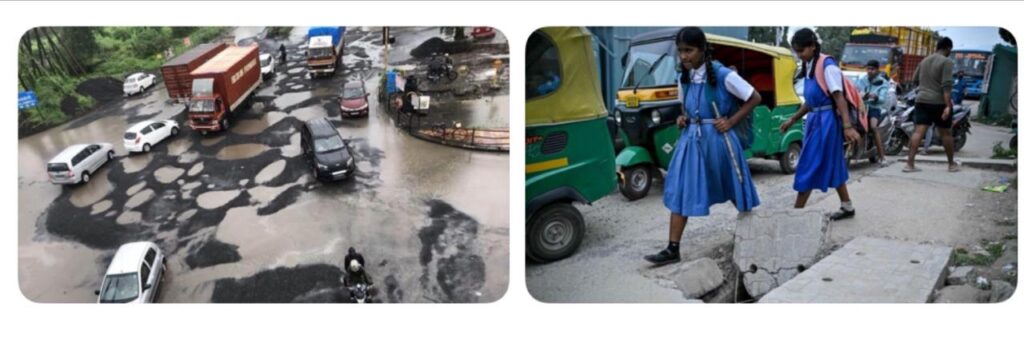
Ignoring standards results in premature road deterioration, potholes, waterlogging, damaged footpaths and poorly reinstated utility trenches. These failures waste resources, reduce productivity and create safety risks. India’s journey has moved from traditional craftsmanship to scientific engineering, institutional standards and industrialised construction, towards digital construction.
For Viksit Bharat 2047, standardisation must become a culture rather than merely a document. Every construction professional must uphold standards, transfer knowledge and mentor the next generation. Standardisation is not merely a technical requirement; it is a professional commitment, moral responsibility and national duty to create durable infrastructure and a capable construction workforce for the future.


Er. Manoj Deshmukh, B.E.(Civil), FIE, CEng
Co-chairman, National Committee for BIS-Builders’ Association of India (BAI)
LL.B. Candidate, SPPU
Participant, EPBF, IIM Ahmedabad
Past State Secretary, BAI Maharashtra